Lore: Martial Bodies of the River Lords
The Gleshmerians, as a ethnic group have a proud military history, upon their home continent the armies of Ythr and Mounbreath were reknowned for their martial capabilities in handling the Vilhmae Revolts and the Necerach Wars. When the Fall of Ythr occurred the mass exodus of the Gleshmerian peoples to Malteria left the fighting spirit of the society largely broken. In the centuries since the establishment of their first settlements on the continent the legends and traditions of the military forces of old Gleshmere have been the guiding light by which the new armed forces of the post-fall nations would forge themselves.
THE RIVER LORDS.
While the River Lords as a nation adopted an official policy of peaceful non military proliferation, it has always been common knowledge that the mighty central Malterian Oligarchy dealt heavily in shadowy dealings with mercenaries, assassins and political dissidents. When the Dark Wardens invaded northwestern Malteria and assaulted the Lordsmen's northern border fortress, the Lords were forced to adopt a rough formal military structure, based off broad and poorly thought out contingency plans for what was once thought to be a political and logistic impossibility on the continent. The River Lords formed the Army of the North, primarily comprised of levy militia led by what few combat veterans the nation could muster. Through sheer body count and tenacity the Lordsmen gained a minor victory at The Battle of Saviors Road, but would lose almost the entirety of their new fighting force in the bloodbath.
State Levies.
Levies are the staple of the River Lords regular army forces. They are militia, typically volunteers or occasionally criminals pulled from the countryside villages and colonies. While the Lords try their best to attain a homogenous level of equipment and uniform, this is often not possible due to budgetary and production concerns. Therefore some levy formations are merely in civilian clothing with colored pieces of cloth, or feathers to denote unit and rank, while others are equipped in cheap leather hauberks with a mantle of fur and cloth packs. Most levy formations are equipped with spears, or simple hand weapons such as axes, short blades or hand scythes, to maximize the effectiveness of the poorly trained nature of the force. Levies are led in most cases by "Limited Professionals" which is to say, rank and file soldiers with a propensity for leadership from a cities guard or one of the regional guard formations such as the Wave Guard, or Iron Guard. These commanders are expected to teach the levy under their charge in the basics of formations, and combat en mass.
In the function of the River Lords armies, the State Levies provide the backbone, they perform patrols, garrisons and act as the main fighting line in battle. They build temporary fortifications and extend the influence of the Lordsmen across Malteria. While by no means the most effective combatants, the most well equipped or even the most motivated, the levies of the Lordsmen are numerous and plucky, fully capable of holding the line and grinding down any that might be foolhardy enough to stand against the will of the three cities.

Norastrian Wave Guard.
The Wave Guard is Norastrah's civic guard, one of the most well equipped and well trained regular military forces in the River Lords. The Wave Guard is responsible for patrolling the sea lanes, and guarding the merchant fleet from the predations of the Orcs and the Wardens, they as well act as a policing agent on the roadways in the Northern half of the River Lords, and inside the capital city of Norastrah. The Wave Guard are trained at the Hedgecock Military Academy in Norastrah's administrative district, and as a result are one of the only regular military forces on the continent to possess a formal martial education and undergo an at-length physical training regimen. The Wave Guard are thusly a respected formation of warriors, and are depended upon by the Lords of the nation to carry out rudimentary training procedures for the larger Levy formations. The Wave Guard possess about 3500 members, and 26 Naval vessels harbored in the Ports within the Capital.
Formations within the Wave Guard are divided by the number of men capable of crewing a ship, weather the formation is currently aboard a vessel or not. Formation commanders are referred to as Captains, with junior officers taking naval titles such as Boat Swain, again regardless of deployment location. Wave Guard specialize in a combination of short sword and bow combat tactics, and excel at close quarters combat due to their shipborne nature. This fact makes a crew of the Wave Guard particularly versatile, which is why many of the Lordsmens agents look to requisition these soldiers for their own exploits. The largest negative to the Wave Guard is their expensive nature, it takes a considerable amount of money to equip a crew and several years to train them in all the many duties they must undertake to the high standards that the Academy sets forth for them. The price of admission to this academy is another factor to the expense of the Wave Guard, for many of the force come from wealthy aristocratic families, and some in the Council of Lords chaff at expending "noble blood" even from less prodigious families unless absolutely necessary.
For all that, the Wave Guard have been present at nearly every major battle in the history of the River Lords, participating throughout every stage of the Battle of Saviors Road, The Battle of Fellpine and the War Against the Khalaks. They are a highly motivated and professional force of soldiers, and while few in number, none will argue with their effectiveness and reputation in battle.

Iron Guard of Vettburg.
The Iron Guard are Vettburgs civic guard, and represent the River Lords only formation of Heavy Infantry. The Iron guard unlike the guards of Ackers and Norastrah are raised directly under the direction of the Lord of Vettburg and not through the direction of the cities council of elders. While this has been a concern raised by some, for the potential for abuse, the various Lords of Vettburg have refused to divorce themselves from the force. The chief responsibility of the formation is to maintain order and rule of law within the central region of the River Lords. This duty entails the Iron Guard to patrol the river ways that criss-cross through the duchy of Vettburg and all the villages and homesteads of the province, it brings them more and more into bloody bouts with bandit groups and more recently deserters and rebels in the southern portion of their territory. While other professional forces of the Lordsmen, fight in light armor and use medium range skirmishing techniques to wear down an opponent. The Iron Guard wear heavy suits of scale mail and hold man sized tower shields and pavise/pike teams to form an unassailable wall of spears and swords, nearly immune to arrow fire. While this makes the force insanely expensive to equip, its the perfect answer to fighting in the bread basket of the River Lords, with its large expanses of flat grasslands, devoid of trees or real cover.
To gain acceptance with the Iron Guard, one must first be privileged enough to earn an audience with first a member of the force, and then after being sponsored, an audience with the Lord of Vettburg him(her)self. If found to be a favorable choice for the duty, then it is upon the aspirant to purchase the beginnings of their equipment to the standards that the Guard sets down, which can run into truly lofty price ranges, almost as much as some homes or sailing ships. The high price tag, while on one hand ensures that only the best equipment is purchased, also weeds out peasantry and riff raff from even attempting the feat, since swordsmanship, riding and literacy are all hallmarks of the wealthy and aristocratic, the price of acceptance also acts to ensure a homogenous level of education and training before ever entering into the ranks of the Iron Guard. Iron Guard regiments are commanded by Serjants, and generally number 25 members, with multiple regiments being led by Captains and with overall force command falling to one of the family members of the Lord of Vettburg his(her)self.
While not having as much direct experience in large scale fighting as the Wave Guard or the Firebrands of Ackers, the Iron Guard have perhaps seen more consistent action, as the level of banditry in their home region grows with each passing day with the ever expanding wars abroad. There are some in Norastrah that worry, that the Iron Guard themselves might grow disloyal or begin to question the necessity of their duty, the promises of the Lord of Vettburg seek to assuage such concerns, but who knows what the true motivations of such a person might be...

Firebrands of Ackers.
The Firebrands are the civic guard of the City of Ackers, they guard the southern reaches of the nation from the predations of the Nomadic tribes of the Khalak peoples and more recently the Tempest Orcs. The Firebrands have garnered a certain level of ill repute, due to the recent discovery of a plot by the Lord of Ackers to betray the River Lords. There are those in the upper reaches of government who are questioning how far the seed of treason may have spread, and weather or not a force so corrupted could be counted upon to defend the realm. In spite of this questioning the Firebrands continue to perform their duties, continuing a failing and poorly funded war against the ever strengthening Khalak Tribes.
The Firebrands are a volunteer formation, and are the only civil guard to draw its numbers from interested common folk, this has allowed them to grow to become the largest professional military organization in the River Lords, but has caused their equipment and training standards to suffer in tandem. The Firebrands are so called for their training process, which involves the aspirant forging their own sword and quenching it in the River that cuts through the city as a matter of graduation. For many of the aspirants, it is the first time they have ever possessed a sword of their own and represents their transcendence from a member of the peasantry to something elevated and responsible for the livelihood of others. The Firebrands are organized into thirty to fifty man regiments of light infantry, equipped with their swords and two short javelins, they wear a clock of interlaced fabric which they thread with foliage to act as concealment in the Jungle and its outlying regions. These regiments of infantry are commanded by individuals known as Bushmen, who are generally democratically elected from amongst the Regiments number, auspiciously for their capabilities of leadership, concealment, and pathfinding. As few of the battles of the Khalak War have seen large multi-regiment actions, the odd decentralized and generally informal leadership structure of a Firebrand Regiment allows for it to function fairly effectively in practice. These Bushmen answer to the Lord of Ackers, making the southern lord powerful for the amount of troops at his(her) disposal, though typically these regimental commanders are disdainful of the aristocratic position or other civilian seats of government which rest above them, therefore the Firebrands possess an unofficial hierarchy of three ranks, each possessing total authority over a set of Firebrand Regiments, should the need arise for the Guard to actually be called to full-scale battle. The first amongst these ranks is a Second Ember (generally called a Sember), this position is used to act a superior officer over 2-3 Regiments of the Firebrand, and is decided upon by the Bushmen of those forces. The next rank beyond this a First Ember (generally called simply "Ember") this rank acts to coordinate the actions of multiple Second Embers and thereby anywhere from 4 to as many as 20 Regiments of the Firebrand. The Highest attainable rank within the Firebrand is the position of Kindled, who has full authority over all members of the Firebrand, though it is questionable if the aristocracy of the River Lords would permit a non-noble to hold any sort of authority over so many fighting men and women for any length of time, without a wave of claims of sedition or worse being leveled at the group itself.
The Firebrands have been fighting the Khalaks for nearly a half century, and are fiercely proud of their defense of the Lordsmen's southern border, in spite of little support from the National government and regular army forces. They have lost much, and the number of battles in the colonies and towns in the south is difficult to number, but still they fight on, to preserve the region under their care for as long as they have blood to spill and lives to give.
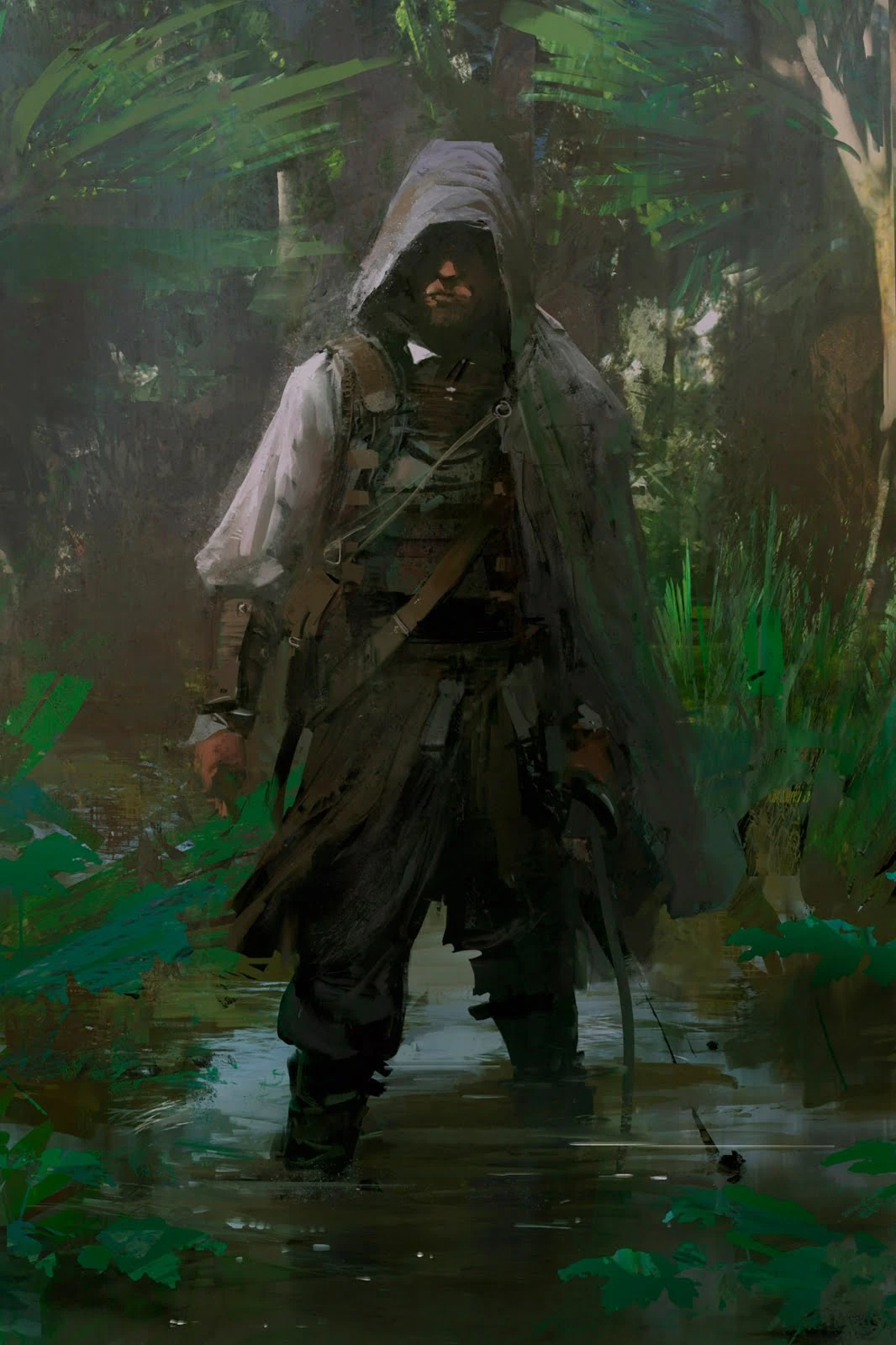
The Indagators.
Essentially the secret police and intelligence arm of the River Lords, the Indagators operate in the shadows, spreading far and wide across Malteria and beyond to ensure that the interests of the River Lords are maintained. They act with impunity and carry no trace of badge, nor uniform. The Order of Adventurers recruits explorers and hardy folk that show loyalty to the three cities and inducts them into a psuedo-religious orthodoxy to the government of the River Lords. Each Indagator operates independantly and is given orders directly from the council of lords themselves through the head of the Order. These orders might be political assassinations, intelligence gathering, training, extortion or anything else that could exist outside the bounds of morality.
To many within the River Lords the Indagators are a feared group, nearly mythical in their capabilities and commitment to achieving their goals. Those within the order, accept their status as cultural pariahs, they have no qualms about the nature of their work, for they are among the honored few that know the real terrors that writhe barely contained at the corners of the civilized world, It is their burden to keep the real myths at bay, to find and contain all the nightmarish abominations which can not be revealed to the world, in check, while also ensuring a brighter future for their homeland. A future none in the order expect to survive long enough to see.
When the armies of the River Lords met forces of particularly dangerous scope, Indagators will be dispatched to assist them. Whenever a farmer discovers the buried entrance to an ancient catacomb, it is a band of black clad, warriors who will arrive in the night and descend into its depths to keep the horrors within from seeing the sun once more. The Indagators are equipped by the Lords with whatever they need to accomplish their goals, so that the lords still exist. It is a thankless, horrifying and unfortunately short life for many inducted to the post, but one that must exist through the necessity of Malteria's reality.

The Curian Pride.
The Curian Pride is the personal bodyguard to the River Lords themselves, they are permanently stationed within the Palace of Norastrah, and are the stewards of both the lives of the Council and the true nature of the Fall of Ythr, A fact not even entrusted to the Indagators of the Order. The Curians number 300 souls at all times, never more and never less, the entire formation is trained from birth to be a member of the pride, and an aspirant member (who can be no older that the age of six) must be able to produce evidence of a family line all the way back to Mounbreath-Ythr and the survivors of the Fall.
The Curian Pride, are said to have been the regiment of men entrusted with the safety of the refugees fleeing Gleshemere at the height of the Fall. While all other members of the Ythrian Legion and the Pridesmen of Mounbreath gave their lives to buy time for the exodus to take place. It was the Curian Pride that defended the early settlements from the horrors of Malteria in the early days, and it was the Pride that taught others the stories and traditions of the Gleshmerian warriors. In the modern age, the Curian Pride are warrior monks, the last of their people to worship the world-wolf Gleshemere to the exclusion of all others, just as the people of Mounbreath did so long before. They preserve tactics, fighting styles, texts and legends from that ancient land as well, guarding these things with every fibre of their being.
The Curian Pride is equipped in reliquary armors of the Ythrian Legion, each suit carefully passed down from member to aspirant over centuries. Each mantle carries countless immeasurably powerful enchantments crafted by the arch-wizards of the Ythrian Observatory almost half a millennia ago. While it has been a hundred years since any member of the Curian Pride has been called upon to spill blood to defend their charges, the group practices combat excersies for hours every day, training for a time in which they might need to preserve all they hold dear.
The leader of the Curian Pride, called the Priest of the Fang, is considered to be the most skilled, and most capable single fighter in all of the places touched by Gleshmerian culture, to be in this honored place is to carry an impossibly heavy burden of knowledge, and duty. The Priest of the Fang, is responsible for all decisions regarding recruitment, deployment, and the sharing of information, essentially the survival of this last fragment of their peoples cultural past rests in the hands of the holder of this title.

Court of the Umbral Covenant.
The court of the Umbral Covenant, is not an official or sanctioned military organization recognized by the government of the River Lords. It is a violent, religious orthodoxy which seeks to actively sow chaos and anarchy at the expense of anyone who rejects the teachings of the cult's leaders. While the Order of Indagators know of the Court and that its main safe hold lies somewhere within the River Lords borders, it is not clear where this location is. The court is a perversion of an age old Gleshmerian religious order, which found its golden age at the height of Ythr's power, just before the schism which created Mounbreath. This order was known as the Church of the Black Angel, and focused its teachings on a prophesied savior figure emerging from a plane outside reality. and blessing the faithful with magics unimagined, as Ythr's Mages continued to probe at the borders of what was possible in the arts of magic they discovered the dimension known as the Nether. This ancillary world, exist's just beneath the surface of reality, and is a barren, malign place of eternal twilight. While the mages moved on to look for grander planes to explore, the Church of the Black Angel were clutched by an obsession for the Nether, seeing it as the land wherein they would discover their prophisied savior. The Church would fracture during this period into Extremists and Moderates, with the vastly larger Extremists conclave journeying into the Nether to seek out the Black Angel. No member of the Extremists have been seen in Twelve hundred years, inside or outside of the border dimension.
After the disappearance of the Extremists, the Moderates of the Church, began to fold their religious teachings into the ever growing practices of the Priests of Gleshmere. Diluting the more fringe aspects of the Church into the wider faith of the World-Wolf, the Black Angel figure became more of a fable within the wider worship of Gleshmere. When the Fall of Ythr occured, the traditions of the church were carried to Malteria during the Exodus. As the Gleshmerians started to establish themselves on the continent and the echoes of the Fall started to fade into time, the Church grew distant in memory, its few members becoming outcasts from the new societies of Malteria. Out of these handfuls of religious outliers, a new order of the old Church was established, starting out as a core of faithful religious devouts, it slowly grew to envelope a massive web of half-connected contacts, safe houses, paid off guards and even nobles through the continent.
This new branch of worship for the Black Angel, idolized the theorized martyrdom of the extremists and their expedition into the Nether. It was felt by the cult that death must then be neccessary to bring about the arrival of the savior, and in a twisted ritual the cult sent out its agents into the countryside of the River Lords, storming into manors and villages across North and Central Malteria in a wave of violent kidnapping and murder, any who refused to convert to the cults insane beliefs of flagellant worship and holy war, were put to the sword along with their families. This night of violence is called The Night of Burning Plains, in the River Lords for the sudden conflagration of huge tracts of wheat fields and manors. For the cult it became the night which birthed the Court of the Umbral Covenant, a contract writ in blood and fire with the Black Angel and those who disappeared looking for it which would act as a promise to sow chaos and create a place barren of life, to welcome the savior into this reality through a crimson sea of Martyrs blood.
Members of the Court are recruited in every corner of the continent, generally by unknowing friendly contacts who are only responsible for grooming young and impressionable individuals, who feel left out of society or who have violent tendencies. Many of these contacts believe they are helping to curb the youths aggression, and hand them over to other contacts who will deliver the youth to a temple or safehouse which they believe to be owned by a true order of monks or state magicians. These contacts will be paid for their troubles and assuaged of any concerns, and the youth will have its first contact with real members of the Court, at which point it will either join and become indoctrinated in the Courts religious teachings of violence, or it will refuse and will be killed and dumped in the Bay of Gleshmere by fishermen who have been assured of the quality of the chum they have purchased.
The Indagators of the Order of Adventurers have spent decades hunting down agents of the Court, this pursuit has taken them all across Malteria, to other continents and even into the Nether on a handful of disasterous occasions. They consider the Court their dark foil, both hunt down ancient artifacts and tombs with equal fervor, each seeking to gain any advantage possible to bring about their own ends, but while the Indagators use violence to protect the realm, to the Court, Violence is its own end.

The Seedloaf Rebellion.
The Seedloaf Rebellion is a popular revolt, which has been forming for a short time within the south central region of the River Lords, getting its start just after the Battle of Saviors Road, which saw the council of Lords begin to make drastic cuts to the amount of grain given to citizens of the oligarchy in order to supply the ever more costly wars in which the nation has begun to find itself in. With so many fighting age adults pressed into the State Levies and sent either north or south to aid in combat, many villages and fringe colonies have been left open to the predations of banditry. While the civil guard of the three cities have found themselves drastically over taxed by maintaining all of their duties as well as taking a leadership role in training up new regiments to form the reconstituted Army of the North.
The Seedloaf Rebellion started after the very public assassination of the Lord of Ackers by a large contingent of Wave Guard and Indagators in the weeks after the loss of the Army of the North. While the official reason for this action has been that the Lord was involved in sedition and conspiracy to commit large scale treason, there were many within the Duchies of Vettburg and Ackers, who felt that the situation was an example of the rich nobles of the capital looking to flex their political might by eliminating southern aristocrats. When Norastrah put a bar on the assumption of the position until after a result could be attained in the War against the Dark Wardens, many in the South felt that they had no other option but to take the law and defense of their homes into their own hands. Lead by a former Bushman from the Firebrands named Henrori Faet, the Rebels have positioned themselves at the base of the Blacktooth mountains, and are gathering numbers to march on Ackers and then North from town to town to protest the wars and actions of the Lords of the Realm. Their core grievances are the death of the Lord of Ackers, the abuse of national supplies on multiple aggressive foriegn military campaigns rather than seeking diplomatic outcomes, and the increasing contempt shown by the aristocracy for the lower levels of their society.
While the Rebellion is armed and made up of a great many angry persons, the force has yet to engage in battle with any formal units of the River Lords military, it has however engaged with members of the Khalaks, who see the presence of the force within their Jungle as desecration. To Faet the Jungle dwellers might provide a good way to harden his force, in preperation for their March North through bandit riddled countryside, and through what is sure to be more than a few regiments of Loyalist Civil Guard and State Levies.


Comments
Post a Comment